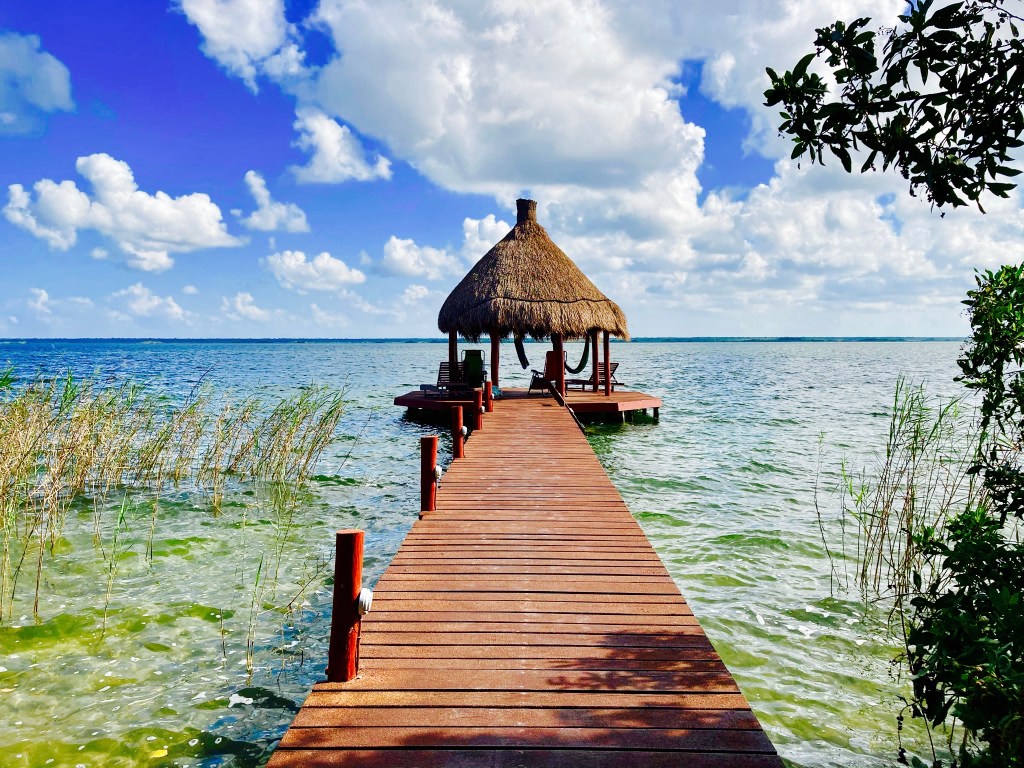
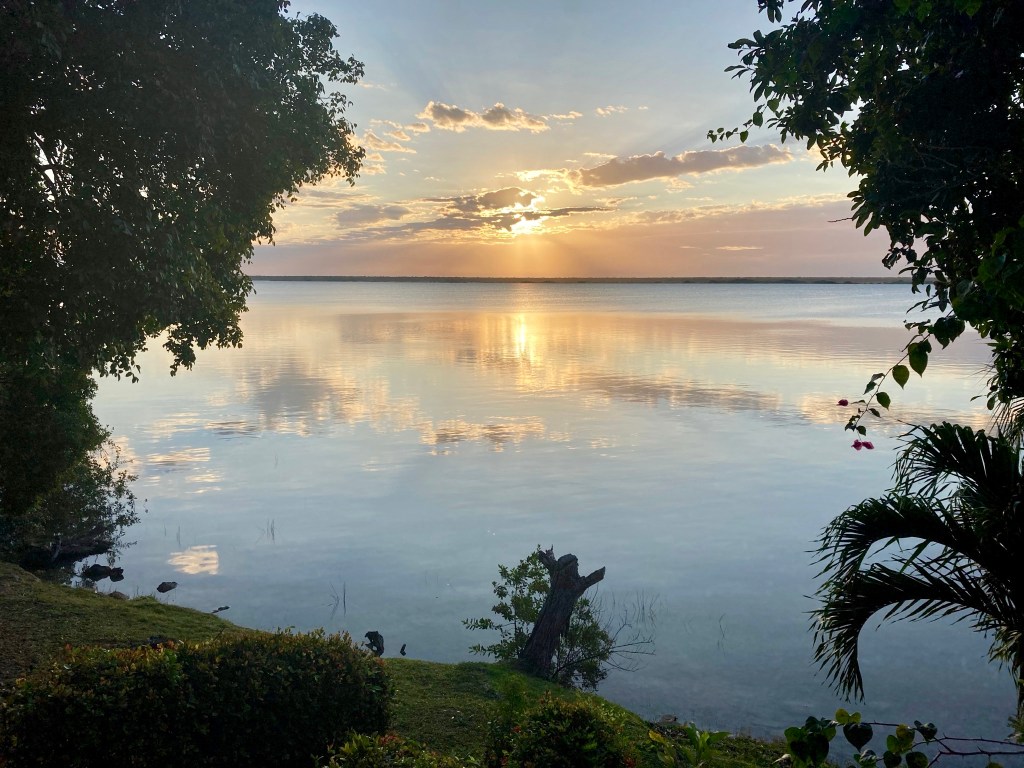
The Bacalar Lagoon, also known as the Lake of Seven Colors, is the biological marvel of Mexico’s Riviera Maya. The shifting azure colors of the lagoon invite you to explore its many channels and islands or simply spend a day lounging in a hammock over its calm waters. The ever-changing shades of the lagoon vary from indigo to emerald to turquoise and every color in between. Even for night owls, the brilliance of the sunrise reflecting over the lake’s glassy surface in the early morning is not to be missed.
The beauty of the lagoon is in large part contributed to its limestone soil bottom which lends itself to the perfect habitat for one of Earth’s oldest organisms, stromatolites. The Bacalar Lagoon is one of only a handful of places in the world where stromatolites are found. It has one of the largest concentrations in the world of these living microbial communities consisting of layers of limestone and sediment bound together by microorganisms and built up over thousands of years. Stromatolites represent some of the most ancient lifeforms on Earth, dating back 3.5 billion years. These unique round structures, along with the lagoon’s white limestone bottom, and the multiple cenotes feeding into the lake all contribute to a unique ecosystem that gives the lake its famous seven shades of blue. So, when visiting the Bacalar Lagoon be sure to tread lightly on this delicate marvel of nature.
Exploring the Lagoon
While the town itself is rich in history and culture, the main draw of Bacalar is the magnificent Lago de Siete Colores. There is no shortage of tour companies clamoring for a chance to take visitors on a boat tour of the lake’s impressive 54 kilometers of shoreline. However, it is important to keep the fragile ecosystem in mind when exploring the lagoon. Agriculture, tourism and recent hurricanes are all severely impacting the fragile ecosystem of this natural wonder and taking a toll on the lake’s stromatolites and water clarity. Take caution to contribute to the preservation of the lake by engaging in eco-friendly activities on the lake. Never touch the stromatolites, do not wear sunscreen, insect repellent or other lotions in the water, and minimize your impact as much as possible during your travels.
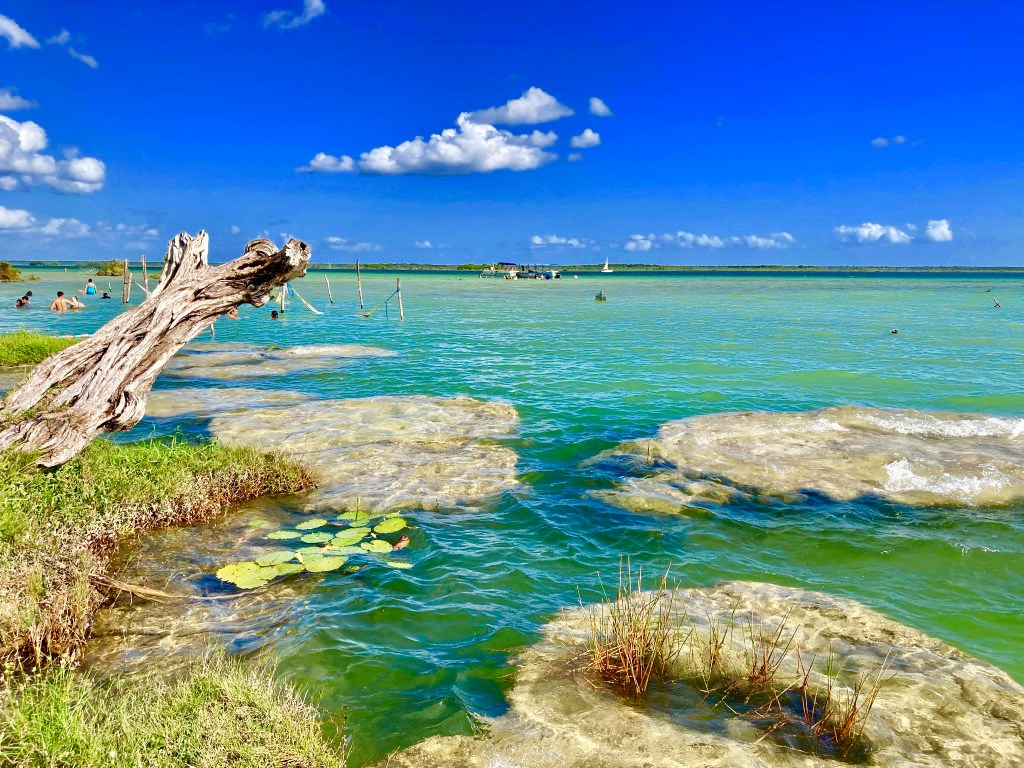
Boat tours are undoubtedly the perfect way to really explore the lake in all of its wonder. There are many channels, islands and cenotes that all provide a different perspective of the lagoon. The most environmentally friendly options are to explore the lake by either sailboat or kayak. There are plenty of options for sailboat tours and kayak rentals, and kayak usage is often included with many of the lakeside accommodations. For sailing eco-tours, sailboat rentals, and kayak rentals check out Veleando Ando or Agua Viva Sailing and Kayak. It is also possible to reach many of the destinations along the shore by foot, bike or car.
Balnearios
Los balnearios, or spa clubs, are essentially lagoon access areas where you can spend the day lounging and bathing in the lagoon. Some also have facilities such as restaurants, kayak rentals and spa amenities. Note that the shores of the lagoon are composed mainly of vegetation, mangroves, or rocks, not sand beaches. Therefore many of the resorts and balnearios have wooden docks or palapas reaching out over the lagoon. If your hotel does not have water access, there are a few balnearios walking distance from town. In town, you can find a free public access point at the Parque Ecologico where Calle 18 meets with Avenida 1. A little further down Avenida 1 near Calle 14, Balneario Municipal El Aserradero is another public access frequented by locals. One of the most popular and largest balnearios in Bacalar is El Balneario mágico Ejidal. The shallow waters here make it popular with families. Entry is 15 pesos with the option to rent a palapa for 300 pesos. There are several amenities on site, including a restaurant. At the north end of town is the tranquil Balneario de la SAARCH, and Rancho Alegre is a popular balneario at the south end of the lake.
Cenotes
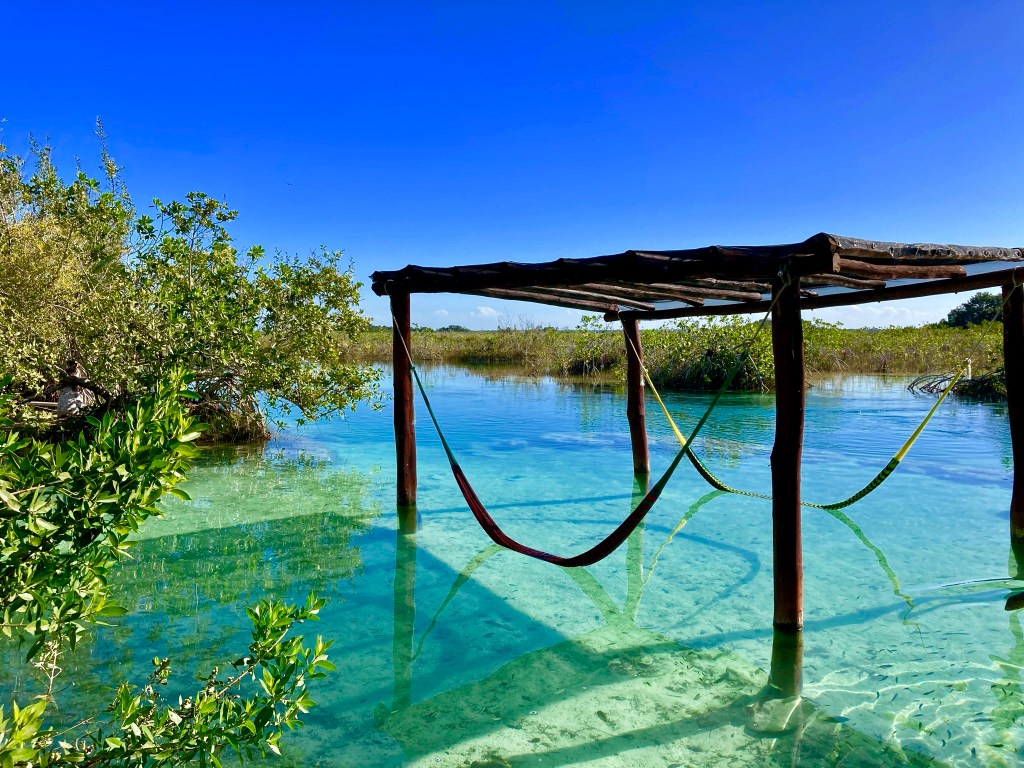
The cenotes feeding into the lagoon that are essentially sinkholes connected to an underground water system that have created natural wells. These cavernous swimming holes found throughout the Yúcatan peninsula were sacred to the Mayan who believed that they were a passage to the underworld and a connection to the spirits and gods. Bacalar’s cenotes are great places to enjoy the lagoon’s various shades of blue, swim, snorkel and even dive. Most of the cenotes open up directly into the lagoon and can be accessed by boat or kayak.
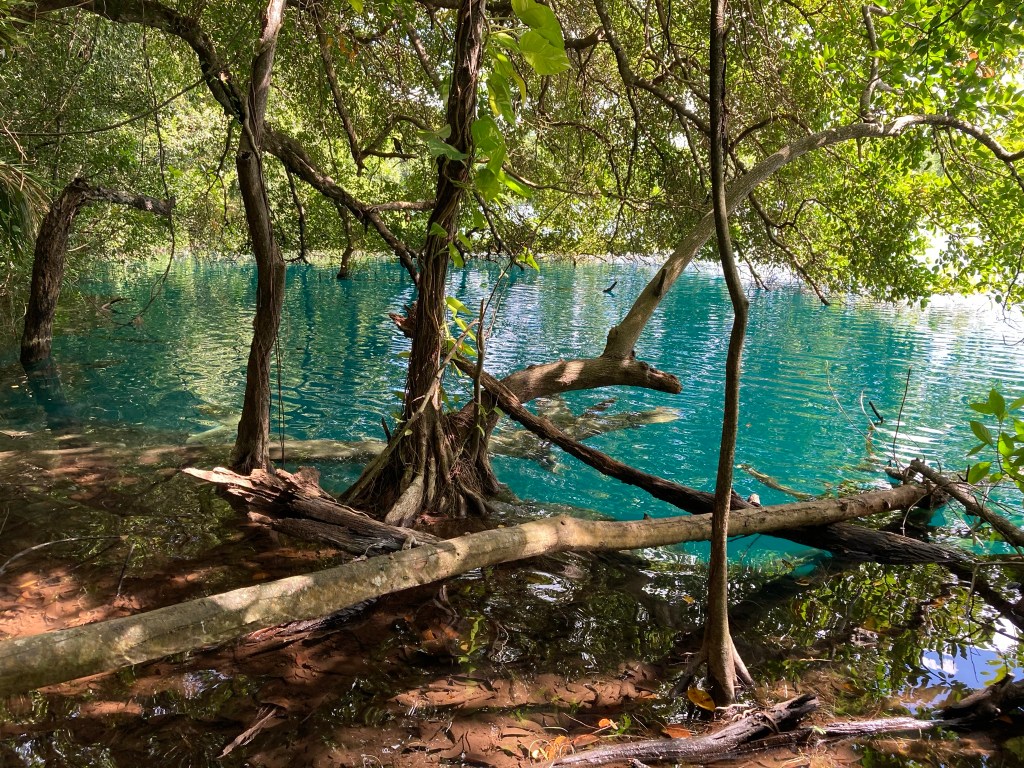
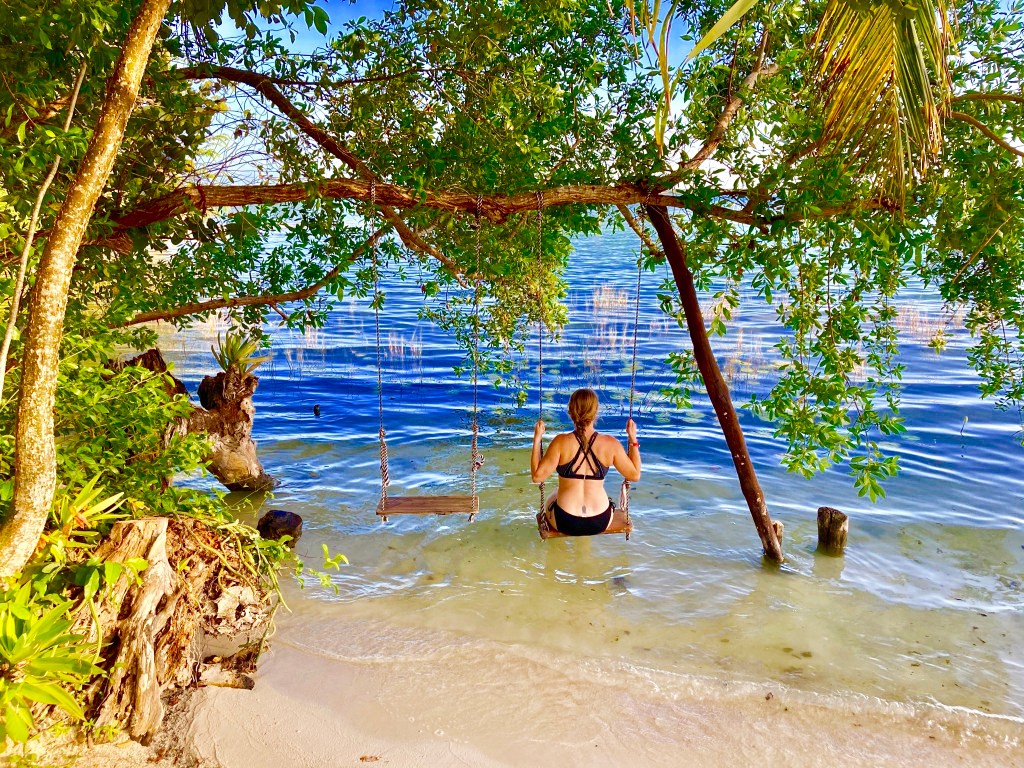
Cenote Cocolitos is easily accessible boat or by land. By land, the beach area has an entry free of 35 pesos and has a somewhat less touristy feel. Like most of the cenotes in the area, Cocolitos opens up into the lagoon with a remarkable display of the cenote’s deep blue waters giving way to the turquoise of the shallow lagoon. Playa Cocolitos is located adjacent to the cenote and is also know as the Stromatolite Sanctuary, making it a great location to view the stromatolites. This beach also offers kayak rental and a small food stand where you can grab a beer or a bite to eat. Perhaps the best ways to enjoy this park are by relaxing in one of its overwater hammocks or taking in the view from the swings submerged in the water.
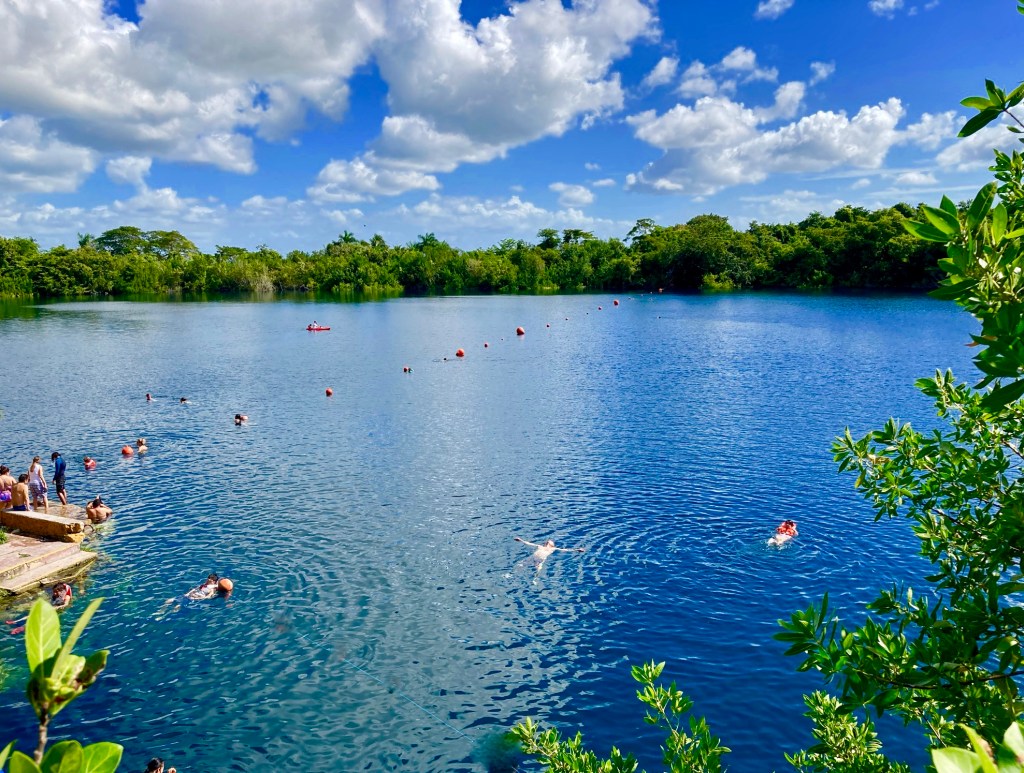
Cenote Azul is a brilliant sapphire swimming pool the size of a small lake, surrounded by dense vegetation. Plunging to a depth of 90 meters, it is one the deepest cenotes in the Yúcatan. Gazing down through the remarkably clear water into the profound depth of the cenote is a remarkable experience. Unlike the other cenotes along the Bacalar Lagoon, it is separated from the lagoon by a thin strip of jungle, and must be accessed by land. A small entry fee of 50 pesos provides access to the lagoon as well as an on site restaurant and kayak rental. Here you will find a relaxed atmosphere where you can swim, snorkel, kayak, or dive in the calm crystalline water. Snorkeling along the edge of the lagoon the visibility is amazing, and you will witness fish darting in and out of the tree roots that stretch meters down into the cenote’s abyss.
Los Rapidos
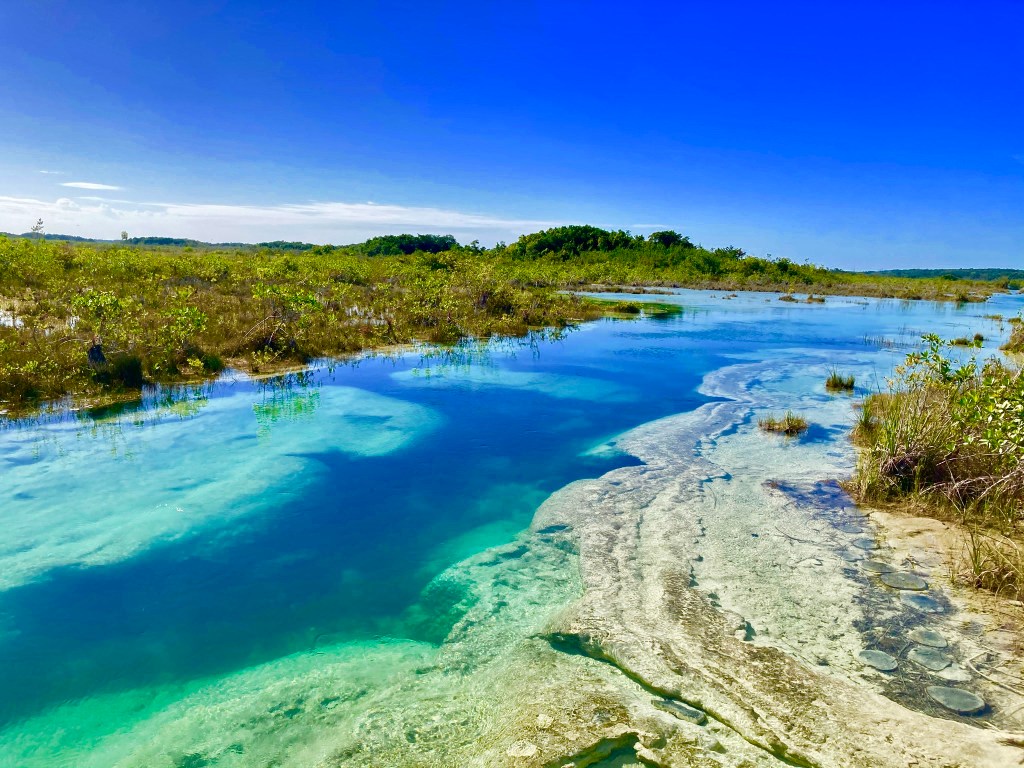
One of the most popular tourist destinations, and one that will undoubtedly be recommended to you, is a trip to Los Rapidos. Water flows more quickly through these narrow channels promoting a stronger density of nutrients in the water, so here you can find the greatest concentration of stromatolites along the lagoon. To access Los Rapidos pay an entrance fee of 150 pesos at the restaurant that is located adjacent to the channel. This truly is a breathtaking spot to view the stromatolites in the lagoon’s turquoise waters and be swept away by the gently flowing water. However, the negative environmental impact of tourism on the natural beauty of this area is evident. While there are signs posted to warn visitors to not walk on the stromatolites or to wear sunscreen, it is not enforced in any way. The staff is much more concerned with ensuring that you order the minimum amount of food and drink required to use the swinging canopy beds than they are with monitoring preservation. While we were fortunate to visit during a time when there were few visitors, it a very small space along a short segment of the lagoon. After only an hour at the site, the water quality was already diminished, and I cringed watching a child unwittingly climbing over a stromatolite. I cannot imagine what the impact would be when the site is full of swimmers, paddle boarders and kayakers. I personally would not choose to support this location in the future, but I have to admit that it was beautiful to experience. If you do choose to visit, I recommend arriving as soon as it opens to really enjoy the natural serenity before the crowds pour it, and make sure to carefully follow all of the preservation guidelines.
Preservation
The natural marvel of the Bacalar Lagoon is the result of a unique ecosystem thousands of years in the making. Unfortunately, damage from the tropical storms and hurricanes of 2020 have recently impacted the clarity of the lagoon. While it is gradually improving, some scientists fear that with the increased severity and frequency of these storms paired with the impact of development, tourism, and agriculture, that the lagoon will never quite return to its previous brilliant colors and clarity. The future of the lagoon is dependent on the conservation of its biodiversity, stromatolites and ecology. Finding a balance between preservation and development of the community will continue to be a challenge in the years to come. If you choose to visit Bacalar, please do all that you can to contribute to the conservation of the lagoon’s unique ecosystem.
To help keep Bacalar blue, stay in hotels and patron businesses that promote eco-friendly practices. Avoid the use of motorboats and instead opt for sailing or kayak tours. Limit noise in the mangrove areas to avoid disturbing birds’ habitats. Enjoy but keep your distance from the stromatolites; never touch or step on them. Do not wear sunscreen, lotions or insect repellent in the lagoon or the cenotes. Quintana Roo has recently taken a great step toward reducing waste by outlawing single use plastics such as straws and plastic bags. Bring a reusable bag for groceries and a reusable water bottle to contribute to the effort. The tap water is not safe to drink in Bacalar, but most hotels will provide large 20 liter jugs of potable water. Following these standards you will still find endless opportunities to kick back, relax, and immerse yourself in the natural beauty and nourishing waters of the Laguna Bacalar.
For more information on the preservation of the Bacalar Lagoon, or to donate, check out Agua Clara, a research group committed to the lagoon’s conservation.
 Travel En Vivo